The original sensor used conductive probes inside the ingredient dock to detect liquid by bridging two metal contacts. With water-based ingredients it worked. With syrups, sugars, or dairy, buildup accumulated on the probes within days. Because the probes sat outside the nightly cleaning path, they were never sanitized. Once fouled, they stopped working, and they fouled fast.
We tried every non-contact sensing method available: break-beam, ultrasonic, optical. Same problem every time. Every ingredient eventually coats the interior tubing walls, making visual and optical detection unreliable regardless of the sensing method.
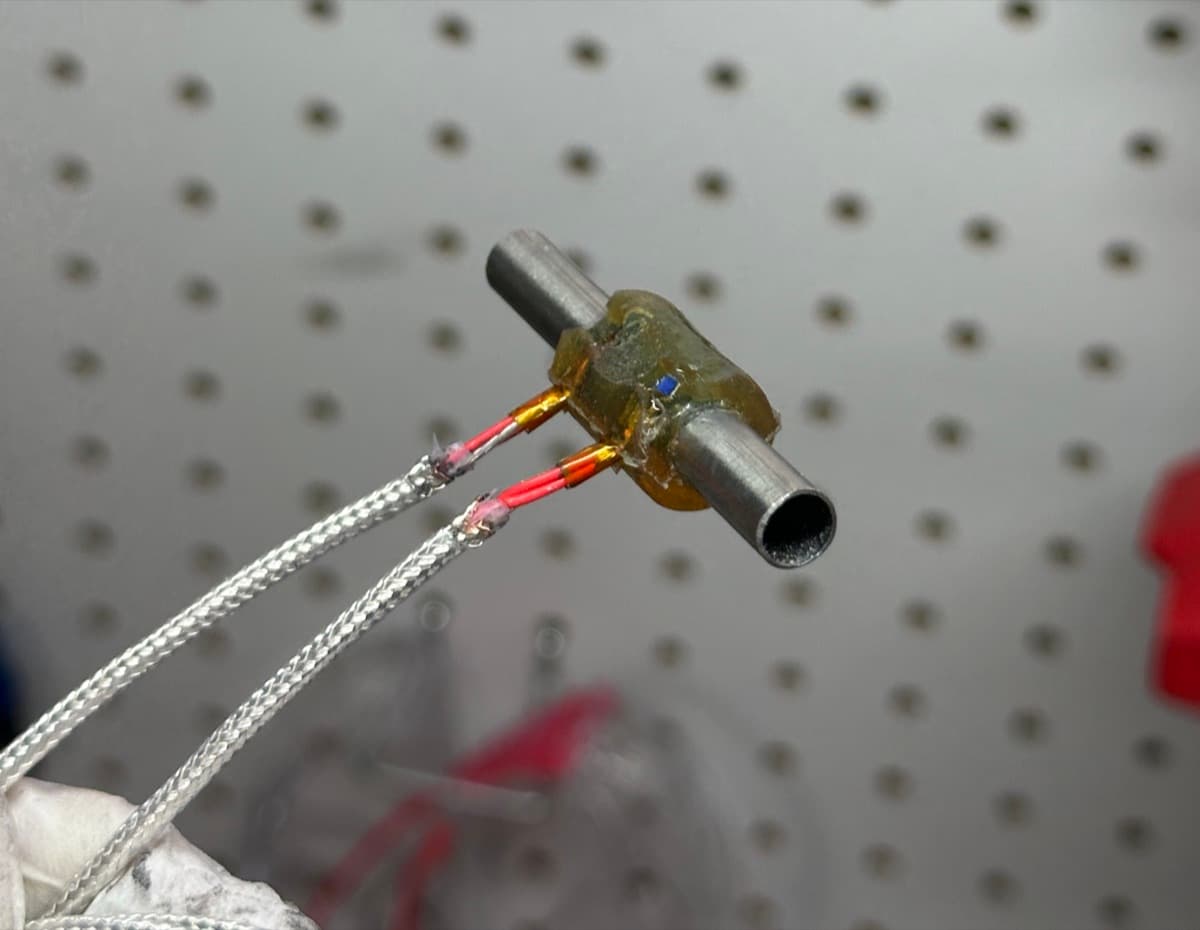
The solution was a custom thermal runout sensor. One RTD element acts as a heater; a second monitors the temperature response downstream. Liquid flowing through the tube draws heat away at a measurable rate, so the sensor detects flow without ever contacting the ingredient. Doesn't matter what the liquid is.
The first attempt used off-the-shelf thermal sensors with copper tape backing, wrapped against the stainless tube with electrical tape. It worked on the bench but was messy, impossible to repeat consistently across units, and the thermal contact varied with wrap pressure. Every sensor performed slightly differently.
That inconsistency motivated building a custom potting jig. We potted the sensing elements directly against the tube using a hot-melt compound, achieving uniform thermal contact without fasteners or snap features. Moving the sensor to just after the ingredient pump placed it inside the cleaning path, so it gets sanitized every night. Off-the-shelf thermal flow sensors ran $50+ per unit — ours cost a fraction of that.
95%
Improvement in sensing reliability
Agnostic
Works with any ingredient type
In-path
Self-cleaning: sanitized every night
Sensing reliability improved by 95%. The sensor works identically across water, syrups, dairy, and every other ingredient in the machine. Removing the probes eliminated the fouling failure mode entirely and cleaned up a hard-to-service area of the machine. Reliable low-ingredient detection now reduces machine downtime between drink orders.